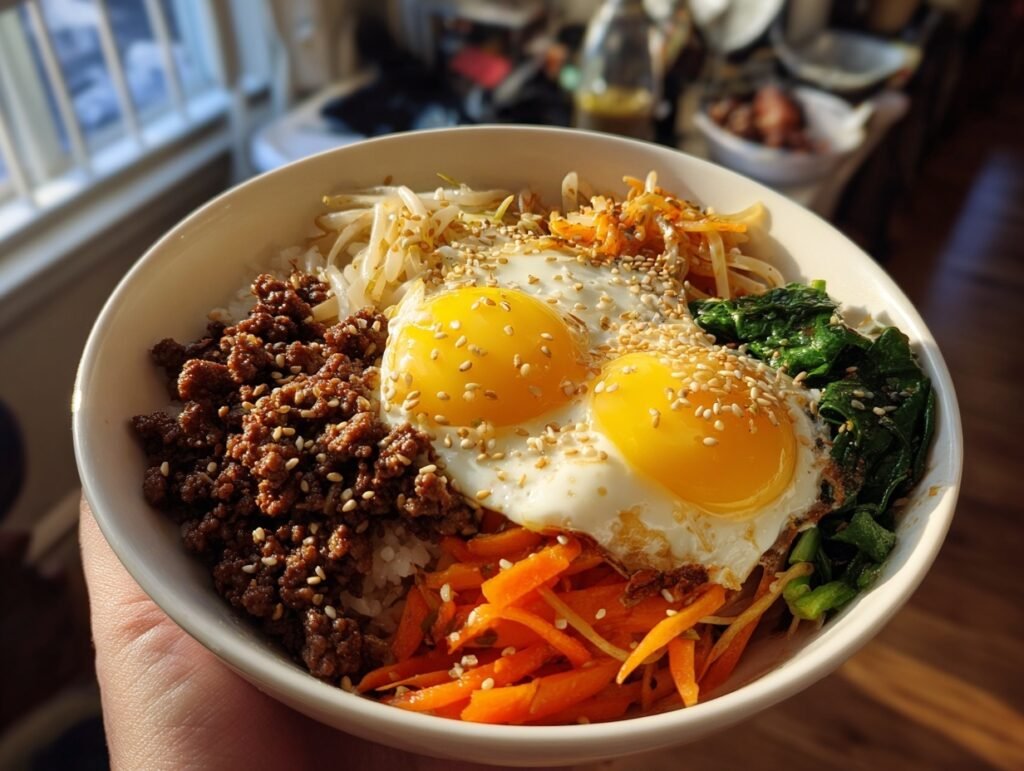
The sizzle of ground beef hitting a hot skillet, the glossy sheen of sesame oil, the bright ribbons of carrot and zucchini, and a sunny yolk breaking to silk the rice—Easy Bibimbap with Ground Beef is a bowl that sings to the senses. Imagine a swirl of colors: deep green spinach, orange carrot, pale zucchini, and caramelized beef crowned with a runny egg and a spicy touch of gochujang. The aroma is nutty and savory with a whisper of heat; the first bite is a perfect contrast of textures—warm rice, crisp vegetables, tender beef, and the glossy coat of sesame.
This version of Easy Bibimbap with Ground Beef is designed for busy weeknights and hungry friends. It looks impossibly elegant on the table—an Instagram-ready whirl of ingredients—but comes together in under 30 minutes. It’s the kind of recipe you’ll pin, make for guests, and feel proud to share because it tastes like a restaurant bowl yet is effortless at home.
Why You’ll Love This Recipe
Quick, colorful, and deeply comforting, Easy Bibimbap with Ground Beef delivers maximum flavor with minimal fuss. The straightforward ingredient list means you can throw this together after work, and its layered presentation makes every serving feel special. The mix-and-match nature of the vegetables turns this into a creativity playground—use what you have.
This bowl is also wonderfully shareable: arrange the components in a pretty bowl, sprinkle sesame seeds, and watch friends reach for a spoon. Versatility is the star—swap vegetables, turn up the heat with extra gochujang, or make multiple bowls for a family-style dinner. It’s a recipe that looks great on a feed and tastes like a warm, satisfying hug.
Ingredients
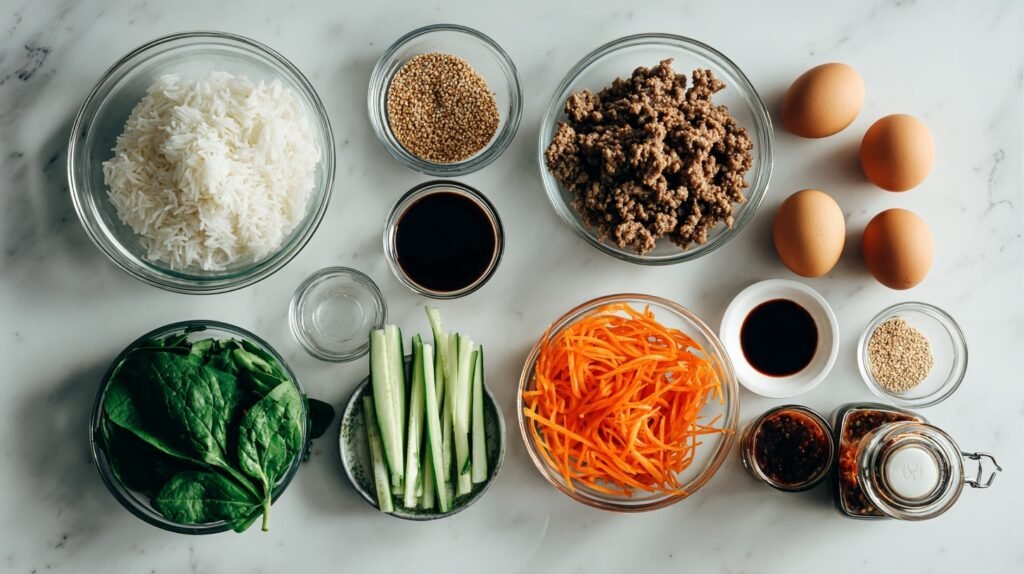
Each ingredient in this Easy Bibimbap with Ground Beef plays a clear role: cooked rice gives a soft, comforting base; ground beef adds savory richness; assorted vegetables bring crunch, color, and freshness; eggs add silkiness; sesame oil and soy sauce provide that classic Korean-inspired aroma; gochujang adds a focused hit of chili-fermented sweetness. Sesame seeds finish with a light toasty crunch.
Ingredients (makes about 2 servings)
– 1 cup cooked rice (short-grain or jasmine; warm)
– 1 cup ground beef (80/20 or leaner, as preferred)
– 1 cup assorted vegetables — carrots, spinach, zucchini (about 1/3 cup each, thinly sliced or julienned)
– 2 eggs
– 1 tablespoon sesame oil (toasted sesame oil preferred)
– 1 tablespoon soy sauce (or tamari)
– 1 teaspoon gochujang (Korean chili paste) (sub: 1/2 tsp chili paste + 1/2 tsp honey)
– 1 teaspoon sesame seeds (toasted; optional extra for garnish)
Quick Overview
– Prep Time: 10 minutes
– Cook Time: 15 minutes
– Total Time: 25 minutes
– Servings: 2 generous bowls
– Difficulty Level: Easy
This is a true weeknight champion—simple prep, quick cooking, and minimal cleanup. Everything cooks in one or two pans, and most of the work is quick chopping and stirring. Perfect for a fast, nourishing meal that still looks spectacular.
Step-by-Step Instructions
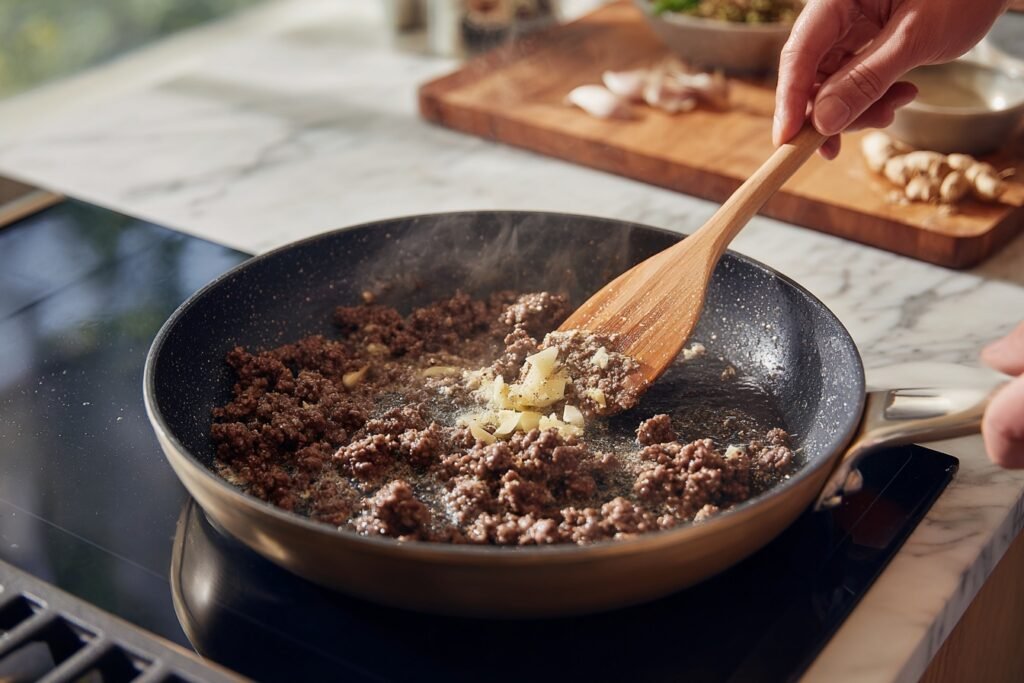
You’re about to build a bowl that dazzles. Work through the steps calmly: prep the veg, sear the beef until golden, sauté each vegetable so it retains vibrancy, and fry the eggs to your preferred doneness. Assemble the Easy Bibimbap with Ground Beef with intention—arrange, drizzle, and sprinkle for maximum appeal.
1. Heat a medium skillet over medium-high heat. Add 1/2 tablespoon sesame oil, then add the ground beef. Break it up and cook until deeply browned and slightly crispy at the edges, 5–7 minutes. Stir in soy sauce, then remove from pan.
2. Wipe the pan lightly and add 1 teaspoon sesame oil. Add julienned carrots and sauté until just softened and slightly caramelized, about 2–3 minutes. Season lightly with a pinch of salt; transfer to a plate.
3. In the same skillet, add thinly sliced zucchini and cook until golden at the edges and tender, about 2–3 minutes. Aim for a little color without mushiness; transfer to the plate.
4. Quickly wilt the spinach in the skillet with a splash of water, tossing until bright green and just soft, about 30–45 seconds. Squeeze excess moisture and set aside.
5. Reheat the beef briefly in the skillet to warm through and glossy with its sauce. Taste and adjust with a drop more soy sauce if desired.
6. Fry two eggs in a nonstick skillet to your liking—sunny-side up with set whites and runny yolks is classic. Cook until whites are set and edges are lacy, about 3–4 minutes, or flip for over-easy.
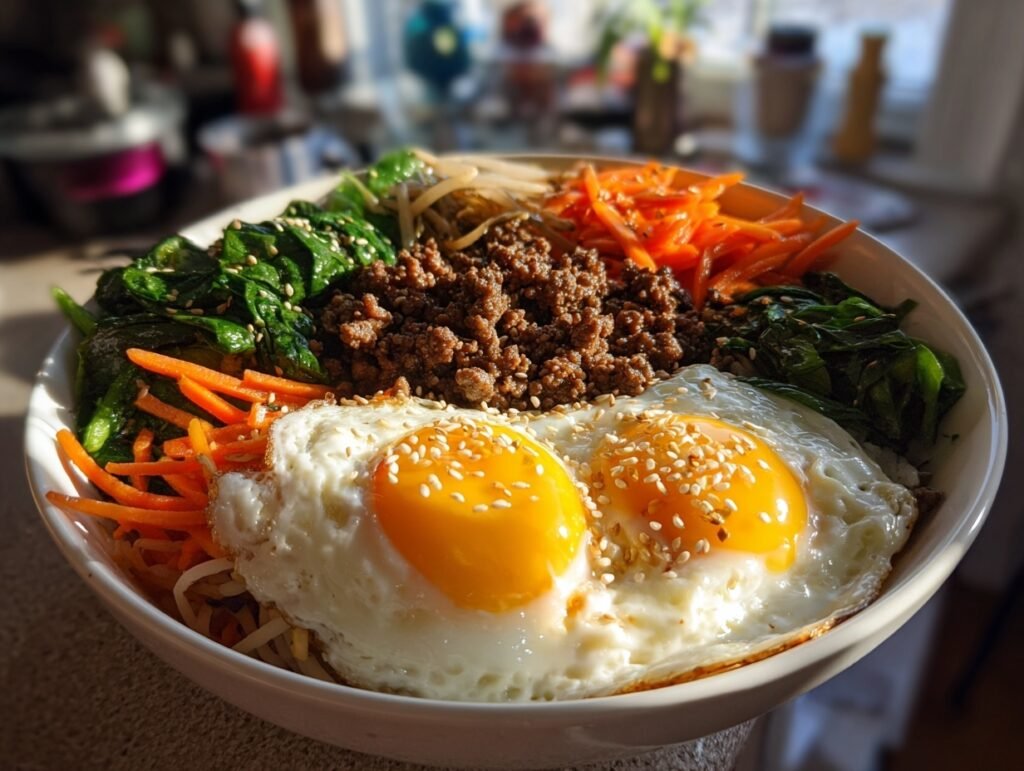
7. Divide the warm cooked rice between two bowls. Neatly arrange the prepared carrots, zucchini, spinach, and warm ground beef in sections over the rice, creating a colorful patchwork.
8. Dollop 1/2 teaspoon gochujang per bowl (adjust to heat preference), place a fried egg in the center, drizzle with remaining sesame oil, and sprinkle with sesame seeds. Mix before eating and enjoy your Easy Bibimbap with Ground Beef.
Pro Tips for Perfect Results
A few thoughtful tweaks make this bowl sing. Use hot rice for better texture contrast with the warm toppings. Slice vegetables uniformly so they cook evenly and look polished. Toast sesame seeds briefly in a dry pan for extra aroma.
1. Use day-old rice or warm freshly cooked rice: dryish grains hold up better under saucy toppings. If rice is sticky, fluff with a fork and spread it on a plate for a few minutes.
2. Brown beef well: high heat creates Maillard-rich bits that add savory depth. Don’t overcrowd the pan—work in a single layer for the best crust.
3. Prep vegetables ahead: slice carrots and zucchini and squeeze/wash spinach in advance to speed assembly. Quick sautéing preserves color and crunch.
4. Control the heat of gochujang: start with 1/2 teaspoon per bowl and add more if you want a stronger kick. Mix a little with sesame oil for an instant sauce.
5. Presentation matters: arrange ingredients in neat wedges around the rice and finish with a glossy egg and sesame seeds. A drizzle of sesame oil right before serving enhances aroma.
Serving Ideas & Variations
Serve Easy Bibimbap with Ground Beef in a wide, shallow bowl to show off the colors. Pair with crisp cucumber pickles or a simple kimchi-style slaw for bright acidity. A small side of miso soup or steamed greens complements the heartier flavors and balances the meal.
If you want to vary textures, try shredding the carrots thinly or roasting zucchini for a smokier note. Swap ground beef for ground lamb for a richer, slightly gamey bowl, or use extra spinach and mushrooms for a vegetarian-forward take (add a touch of soy and sesame for umami). For gatherings, set up a bibimbap bar: place bowls of rice, cooked beef, various vegetables, gochujang, and eggs so guests assemble their own vibrant bowls.
This recipe also miniaturizes beautifully—serve as a filling for lettuce wraps or top a baked sweet potato for a portable twist. The visual contrast of bright veggies against a warm rice base makes this dish a natural for sharing on social feeds.
Nutritional Highlights
This Easy Bibimbap with Ground Beef balances protein, healthy fats, and fiber-rich vegetables. Ground beef provides substantial protein and iron, eggs add high-quality protein and choline, while the assortment of vegetables contributes vitamins A and C and dietary fiber. Sesame oil and seeds offer heart-healthy fats and a warming aroma.
Estimated nutrition per serving (approximate)
– Calories: 520 kcal
– Protein: 28 g
– Carbohydrates: 52 g
– Fat: 22 g
– Fiber: 4 g
These estimates will vary by the exact rice type and lean-to-fat ratio in the beef. The bowl is satisfying and can be lightened by using leaner beef or more vegetables if desired.
Storage Made Simple
Refrigerator: Store components separately in airtight containers for best texture—rice, beef, and vegetables in individual containers. Properly stored, cooked rice and toppings will keep for 3–4 days. Eggs are best prepared fresh, but you can store a cooked egg separately for up to 24 hours.
Freezer: Freeze only the cooked beef portion if you need longer storage—place in a freezer-safe container and use within 2 months. Rice can be frozen, but texture may change slightly upon reheating. Vegetables with high water content (spinach, zucchini) don’t freeze well after cooking.
Reheating: Reheat rice and beef together in a skillet over medium heat with a splash of water or sesame oil until steaming—this revives texture. Reheat vegetables gently to avoid over-softening. For the full experience, quickly fry a fresh egg and assemble before serving to bring Easy Bibimbap with Ground Beef back to its original brilliance.
FAQs
Q: Can I use brown rice or another grain?
A: Yes—brown rice or quinoa works well but may change cooking and texture. Brown rice offers nuttier flavor and more fiber; warm it thoroughly before assembling the bowl to meld flavors properly.
Q: What’s the best way to reduce spice?
A: Reduce the gochujang to 1/4–1/2 teaspoon per bowl, or dilute it with a bit of sesame oil and a touch of honey. You can also mix gochujang into a spoonful of soy sauce to tame heat while keeping depth.
Q: Can I make Easy Bibimbap with Ground Beef ahead of time?
A: Prep components up to a day ahead—cook and cool beef and vegetables, and refrigerate separately. Reheat gently and fry fresh eggs just before serving for the best texture and presentation.
Q: How do I scale this recipe for more people?
A: Multiply ingredients per serving and cook in batches to avoid overcrowding pans. Keep components warm in a low oven (200°F/95°C) while you finish remaining batches, then assemble bowls just before serving.
Q: Any tips if the rice becomes clumpy?
A: Break clumps with a fork and sprinkle a few drops of water, then warm in a skillet with light tossing. A quick steam in the microwave covered with a damp paper towel also rehydrates rice nicely.
Q: Can I substitute the ground beef with another protein?
A: Certainly—ground chicken, turkey, or tofu crumbles can replace beef. Adjust seasonings slightly (a touch more soy or sesame) to match the flavor profile, and sear until golden for best texture.
Final Thoughts
Easy Bibimbap with Ground Beef is a celebration of color, texture, and comfort that comes together quickly and looks like a labor of love. It’s perfect for busy nights, friendly gatherings, or any moment when you want something both nourishing and beautiful. The balance of warm rice, savory beef, bright vegetables, and a runny egg makes every spoonful exciting.
If you loved this recipe, save the pin, tag a friend who needs a weeknight winner, and try your own vegetable variations. Mix, match, photograph, and share—this bowl is meant to be enjoyed, savored, and reshared.